How Spray Foam Insulation R-Value Affects Your Home’s Energy Efficiency

Home energy efficiency starts with insulation, yet many homeowners underestimate how much performance depends on understanding insulation ratings. One of the most important metrics is spray foam insulation R-value, which plays a direct role in how well a home retains heat in winter and blocks heat during summer. When insulation performs properly, heating and cooling systems operate more efficiently, energy waste is reduced, and indoor comfort improves year-round.
Spray foam insulation has gained popularity because it does more than resist heat transfer. It creates a tight building envelope that minimizes air leakage, moisture intrusion, and temperature fluctuations. To understand why this material delivers such strong performance, it’s essential to explore how R-value works and how spray foam insulation maximizes its effectiveness inside residential spaces.
What R-Value Really Means for Your Home
R-value measures thermal resistance, indicating how well a material slows the flow of heat. Higher R-values provide greater resistance, which helps keep warm air inside during colder months and prevents heat from entering during warmer months. While many insulation materials advertise high R-values, real-world performance often falls short due to air gaps, compression, or moisture exposure.
Heat naturally moves from warmer areas to cooler ones, meaning insulation must continuously resist this movement. When insulation fails, HVAC systems must compensate by running longer and harder. Over time, this increases energy costs and reduces equipment lifespan. R-value becomes meaningful only when insulation maintains consistent performance across the entire building envelope.
Why Spray Foam Insulation Performs Differently
Spray foam insulation differs from traditional materials because it expands after application, sealing cracks, joints, and cavities that other insulation cannot fully address. This expansion is what allows spray foam to function as both insulation and an air barrier.
There are two primary forms of spray foam insulation. Open-cell spray foam is softer and less dense, offering effective thermal resistance and sound absorption. Closed-cell spray foam is denser and delivers higher thermal resistance per inch while also acting as a vapor barrier. This versatility allows insulation strategies to be customized based on a home’s layout and performance goals.
Because spray foam adheres directly to surfaces, it prevents airflow that can compromise insulation performance. This ability to seal air leaks allows the insulation to maintain its rated thermal resistance under real conditions, rather than just in laboratory testing.
How Spray Foam Insulation R-Value Improves Energy Efficiency
The true advantage of spray foam insulation R-value lies in how it performs alongside air sealing. Traditional insulation may offer decent thermal resistance but still allow air movement, which significantly reduces efficiency. Spray foam eliminates this weakness by forming a continuous barrier that stabilizes indoor temperatures.
When air leakage is reduced, heating and cooling systems cycle less frequently. This lowers energy consumption, reduces monthly utility bills, and improves overall comfort. Homes insulated with spray foam often experience fewer drafts, more even temperatures between rooms, and improved humidity control.
Energy efficiency is not achieved through R-value alone, but spray foam insulation ensures that its thermal resistance is fully utilized, delivering consistent performance over time.
R-Value Needs Vary Throughout the Home
Different areas of a home experience different levels of heat transfer. Attics, exterior walls, crawl spaces, and basements each require insulation strategies tailored to their exposure and function.
Attics are a major source of energy loss because heat rises. High thermal resistance in this area helps prevent heat from escaping during winter and entering during summer. Exterior walls benefit from insulation that limits outdoor temperature influence, while crawl spaces and basements require materials that can handle moisture exposure without losing performance.
Spray foam insulation allows precise application in these critical areas, ensuring that each part of the home receives appropriate thermal resistance without unnecessary thickness or wasted material.
Comparing Spray Foam R-Value to Traditional Insulation
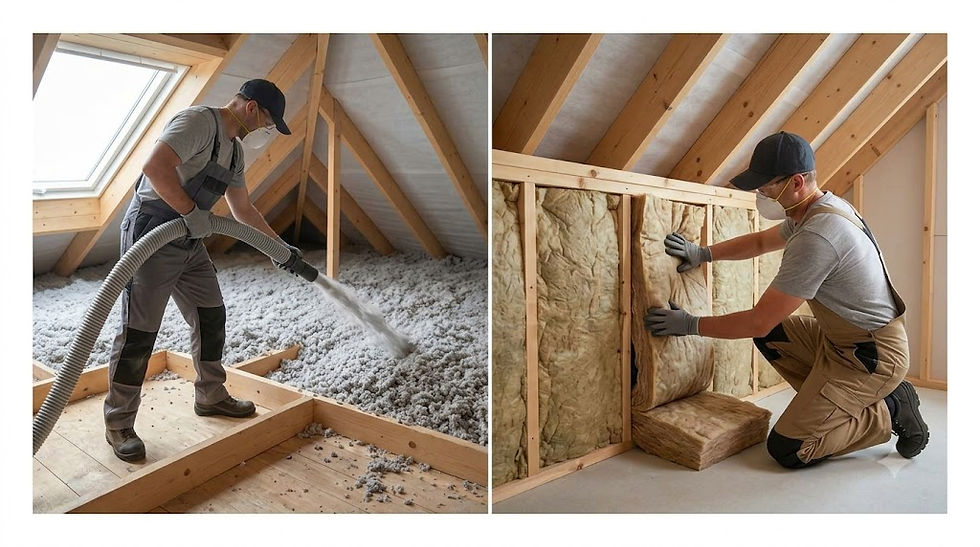
Traditional insulation materials such as fiberglass and cellulose are commonly used due to lower upfront costs. However, their performance often declines over time. Fiberglass batts can compress or leave gaps, while blown-in cellulose may settle, reducing effective coverage.
Spray foam insulation maintains its shape and adhesion for decades. It does not sag, shift, or deteriorate under normal conditions. As a result, its thermal resistance remains stable, making it a long-term solution rather than a temporary fix.
This stability is one reason homeowners increasingly prioritize spray foam insulation when upgrading for energy efficiency rather than relying on repeated repairs or replacements of conventional insulation.
Insulation Performance Comparison
Insulation Type | Approximate R-Value per Inch | Air Sealing Ability | Long-Term Performance |
Open-Cell Spray Foam | 3.5 – 3.8 | Excellent | High |
Closed-Cell Spray Foam | 6.0 – 7.0 | Excellent | Very High |
Fiberglass Batts | 2.5 – 3.0 | Low | Moderate |
Blown-In Cellulose | 3.2 – 3.7 | Low | Moderate |
Indoor Comfort and Temperature Stability
Homes with inadequate insulation often suffer from uneven temperatures, cold floors, overheated upper levels, and uncomfortable drafts. These issues are typically caused by air leaks and insufficient thermal resistance.
Spray foam insulation creates a uniform thermal envelope that minimizes these inconsistencies. By maintaining steady indoor temperatures, homeowners experience greater comfort without constantly adjusting thermostats. The result is a quieter, more balanced living environment that feels comfortable regardless of outdoor conditions.
Moisture Resistance and R-Value Preservation
Moisture is one of the most damaging factors affecting insulation performance. When insulation absorbs moisture, its thermal resistance drops, leading to energy loss and potential mold growth.
Closed-cell spray foam resists moisture intrusion and acts as a vapor barrier. This helps preserve insulation performance even in damp environments such as basements and crawl spaces. By maintaining its R-value under challenging conditions, spray foam insulation supports both energy efficiency and structural protection.
Installation Quality Matters
Even the best insulation material will underperform if installed incorrectly. Proper spray foam application requires precise temperature control, correct thickness, and uniform coverage. Professional installation ensures that the insulation expands properly, adheres to surfaces, and delivers consistent performance.
When installed correctly, spray foam insulation provides reliable thermal resistance, long-term durability, and superior energy efficiency. This makes professional expertise an essential part of achieving optimal results.
Long-Term Energy Savings and Home Value
Improved insulation performance directly affects long-term energy costs. Homes with effective insulation require less heating and cooling, which reduces utility expenses year after year. Over time, these savings can offset the initial investment in spray foam insulation.
In addition to operational savings, energy-efficient homes are increasingly attractive to buyers. Improved insulation contributes to higher resale value and positions a home as a modern, efficient property in a competitive market.
Common Myths About R-Value
One common misconception is that thicker insulation always performs better. In
reality, insulation type, air sealing ability, and installation quality are equally important.
Another misunderstanding is assuming that R-value ratings are identical across materials. Two insulation products with similar ratings can perform very differently depending on how well they block air movement and resist moisture.
Spray foam insulation addresses these issues by combining high thermal resistance with superior air sealing, ensuring consistent performance beyond numerical ratings.
Frequently Asked Questions
Does higher R-value always mean better insulation?
Higher R-value improves thermal resistance, but air sealing and moisture control are also essential for real energy efficiency.
Is spray foam insulation suitable for older homes?
Yes, spray foam is especially effective in older homes where air leaks and uneven insulation are common.
How long does spray foam insulation maintain its performance?
Spray foam insulation can maintain its effectiveness for decades without settling or degrading.
Can spray foam insulation reduce HVAC wear?
Yes, improved insulation reduces system workload, helping extend equipment lifespan.
Is spray foam insulation environmentally beneficial?
By reducing energy consumption, spray foam insulation helps lower emissions associated with heating and cooling.
Conclusion
Understanding spray foam insulation R-value is essential for homeowners seeking better energy efficiency, comfort, and long-term savings. By combining high thermal resistance with exceptional air sealing, spray foam insulation delivers consistent performance that traditional materials often cannot match. Its ability to maintain stability, resist moisture, and reduce energy waste makes it a powerful upgrade for modern homes.
For homeowners ready to improve insulation performance and energy efficiency with confidence, EET Insulation provides professional spray foam solutions designed for lasting comfort, efficiency, and value.


Comments