What Does an Insulation Contractor Do?

An insulation contractor plays a vital role in improving the comfort, energy efficiency, and structural integrity of buildings. From houses to commercial properties, they assess, plan, install, and often maintain insulation materials that help regulate temperature, reduce noise, and prevent moisture issues. In regions like Maryland, where winters can be cold and summers humid, the expertise of an insulation contractor can lead to significant savings on energy bills, healthier indoor air, and longer building lifespan. This post explores what an insulation contractor does, both for residential and commercial projects, how to choose one, and why hiring a professional matters.
What is an insulation contractor and what tasks do they typically perform?
An insulation contractor is a specialized tradesperson or company whose primary focus is installing, replacing, or maintaining insulation in buildings. They deal with materials such as fiberglass, cellulose, spray foam (open-cell or closed-cell), rigid foam boards, and sometimes reflective or radiant barriers. Their work begins with an inspection, often involving reviewing blueprints or as-built conditions, measuring areas, assessing existing insulation (if any), and checking for issues like air leaks, moisture, or pests.
After the assessment, the insulation contractor recommends suitable insulation materials and R-values that meet local building codes, energy-efficiency standards, and climate demands. They handle the removal of old insulation when it's damaged or no longer effective, ensure proper sealing of gaps, install vapor retarders if needed, and then perform the installation, following safety practices.
For large or commercial projects, they may also coordinate with architects, HVAC professionals, structural engineers, or project managers to ensure insulation is integrated correctly with other building systems. Also, commercial insulation contractors often undertake work in hospitals, schools, factories, and multi-unit buildings.
Why is this important for residential insulation versus commercial insulation contractor work?
When comparing residential insulation jobs with commercial ones, there are differences in scale, materials, regulatory requirements, and complexity.
In residential settings, contractors work with homeowners or small builders on new homes, existing homes, basements, crawl spaces, attics, and garages. They tend to focus on comfort, reducing drafts, preventing ice dams, preserving indoor air quality, and controlling heating and cooling losses. Standard insulation types in homes include fiberglass batts, blown-in cellulose, spray foam, rigid board, and sometimes radiant barriers. Contractors must account for tight schedules, occupant safety, minimal disruption, and esthetics.
In contrast, a commercial insulation contractor has to meet stricter standards for fire safety, often deals with larger volume, works in larger structural systems (walls, roofs, mechanical ducts), handles more complex coordination (with building management, HVAC, industrial equipment), and often needs specialized certifications/licensing. The materials used may also include higher performing spray foams, specialized board insulation, insulation for mechanical systems, acoustical insulation, and more.
How does an insulation contractor in Maryland operate — what local factors should one consider?
In Maryland, both residential and commercial insulation contractors must contend with specific climate, building code, licensing, and safety regulations. For example, spray foam insulation contractors in Maryland often need certification under state standards and must ensure compliance with local building codes regarding R-values, moisture control, and fire barriers.
Another local factor is the high variation in home styles — from historic older houses to modern construction — meaning insulation contractors must adapt techniques (e.g. adding insulation in attics, walls, crawl spaces) without compromising historical features or causing moisture/trap issues. They may also need to account for pest infestation, mold, or moisture damage common in humid areas. Virginia, Washington DC, and surrounding regions often share similar requirements.
Pricing, too, can vary widely depending on insulation material, accessibility, removal of old insulation, structural modifications, and whether specialized equipment (for spray foam or blow-in systems) is required. Local climate affects R-value requirements in attics, basements, and walls to ensure seasonal heating and cooling efficiency.
What are the key steps an insulation contractor follows from the beginning to the end of a project?
An insulation contractor’s workflow generally follows these phases:
Initial assessment and inspection: Examining building structure, measuring spaces, assessing existing insulation, identifying leaks, moisture, mold, or structural damage. This may include reviewing blueprints or working with architects.
Selection of insulation material and method: Based on the assessment, deciding which insulation material (batts, blown-in, spray foam, rigid board, etc.), what R-value is needed, and whether additional features (vapor barrier, air sealing, radiant barrier) are required.
Preparation and safety measures: Removing old/damaged insulation if necessary, sealing leaks, ensuring ventilation, masking or covering areas, ensuring workers have protective equipment especially with spray foam or handling old insulation (which could contain fiberglass, cellulose or even historically asbestos in older buildings).
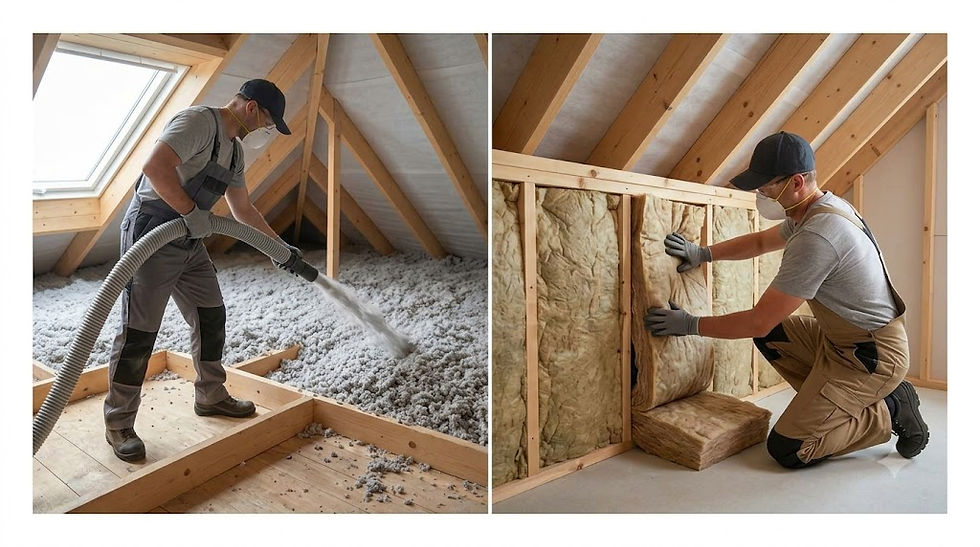
Installation: Applying the insulation correctly — fitting batts, filling cavities, blowing in loose fill, spraying foam or installing rigid boards. Ensuring tight coverage, avoiding gaps, compression, voids, or improper thickness.
Quality checks and finishing touches: Inspecting work, checking for air tightness, verifying R-value achieved, ensuring moisture and vapor barriers are properly placed, sealing edges, cleaning up, and ensuring work meets building codes.
Maintenance and follow-up: Sometimes the insulation contractor will advise on maintenance, monitoring for moisture or pests, or inspect after seasonal changes to ensure performance. Commercial jobs may have warranties or service agreements.
How to choose a good insulation contractor — what questions to ask and what credentials matter?
Selecting a reliable insulation contractor is critical. Poor installation can undermine the benefits of good materials.
Some things to verify include:
Licensing, insurance, and certifications appropriate to the state or municipality. Ensuring they know local building codes and safety regulations.
References, portfolio or past work examples. Recommendations from homeowners in similar housing types.
Understanding of R-values, material science. Does the contractor explain different types of insulation (fiberglass, cellulose, spray foam, rigid foam boards, radiant barriers), their advantages and drawbacks?
Safety practices—proper protective gear, ventilation, handling of old materials, especially if mold or asbestos is potentially involved.
Whether the contractor performs or can coordinate air sealing, vapor barriers, moisture control — small details that affect performance hugely.
Cost estimates—material + labor + removal + finishing. Warranties or guarantees.
The Insulation Institute and other industry bodies often recommend asking for proof of insurance, checking bag labels for insulation material (ensuring proper R-value, proper labeling), and getting detailed written proposals.
What benefits are gained by hiring a professional insulation contractor rather than DIY?
Hiring a professional insulation contractor tends to yield several benefits. First, proper energy and cost savings: a well-installed insulation system reduces heating, ventilation, and air conditioning (HVAC) loads, lowers utility bills, and helps maintain consistent indoor temperatures. Professionals understand how to achieve the thermal envelope correctly.
Second, indoor air quality and health: professionals ensure moisture control, mold prevention, proper ventilation, and safe handling of materials. This helps avoid problems like damp, rot, allergens, or even structural damage.
Third, safety and compliance: contractors follow building codes, fire safety standards, vapor barrier requirements, and often work under warranties. They have training, tools, protective equipment. Mistakes in installation can lead to energy leaks, higher bills, moisture damage, or fire risk.
Fourth, long-term durability and performance: quality installation lasts longer, maintains the designed R-value, and minimizes maintenance or early replacement costs. Also, for commercial settings, good insulation contractor work can contribute to better building performance, occupant comfort, and sometimes even grants or rebates.
If someone wants to learn more about the benefits of hiring insulation contractor experts, these points are central to that discussion — and EET Insulation emphasizes these in its own work.
Common types of insulation methods and materials
Understanding insulation options helps appreciate what an insulation contractor does.
Insulation Type | Typical Uses | Pros & Cons |
Fiberglass batts or rolls | Walls, attics, floors | Pros: low cost, well-known, easy to install; Cons: loses efficiency if compressed or gets wet |
Loose-fill cellulose or fiberglass | Attic voids, irregular areas | Pros: fills gaps, good for retrofits; Cons: needs proper sealing, can settle or absorb moisture |
Spray foam (open-cell and closed-cell) | Tight spaces, high performance walls or roofs, air sealing | Pros: high R-value per inch, excellent air barrier; Cons: higher cost, requires special equipment and safety precautions |
Rigid foam boards or panels | Roofs, exterior wall sheathing, basement walls | Pros: continuous insulation, moisture resistance; Cons: higher material cost, careful flashing/sealing required |
Radiant barriers / vapor retarders / insulation wraps | In attics, on ducts, around pipes | Pros: helps control radiant heat, moisture issues; Cons: must be properly installed to avoid trapping moisture |
How much does insulation contractor work cost and what influences pricing?
Pricing for insulation contractor work depends heavily on multiple variables. In Maryland, cost is influenced by:
The size and accessibility of the area: attics with many obstructions or walls with many studs/joints cost more.
The type of insulation material: spray foam is more expensive than fiberglass or cellulose; rigid foam boards may cost more as well.
Whether removal of old insulation is necessary: damaged, moldy, or contaminated insulation increases labor and disposal costs.
Local labor rates, permitting, licensing and regulation compliance. Commercial insulation jobs often bring extra compliance costs.
R-value required by code or by homeowner preference. Higher R-values need thicker or more expensive materials.
Finishing and sealing work: airtightness, vapor barrier, air sealing around vents and penetrations, etc.
While exact numbers vary, homeowners should ask for detailed quotes. For someone in Maryland, comparing quotes among several insulation company Maryland options helps ensure fair pricing. Also consider long-term savings, not just upfront costs.
Frequently Asked Questions (FAQs)
1. What is the difference between an insulation contractor and insulation installer?
An insulation contractor is usually a business or professional service offering end-to-end insulation services: assessment, design, material procurement, installation, and sometimes maintenance. An installer may simply focus on the physical installation under guidance. Contractors are often licensed, insured, and accountable for meeting local building codes.
2. How do I know when I need a replacement or upgrade for insulation?
Signs include uneven indoor temperatures, drafts, high energy bills, moisture or mold in attic or crawl spaces, sagging or compressed insulation, pest damage, or insulation older than 20-30 years depending on type. In Maryland, cold winters with ice dam issues or hot humid summers suggest evaluation is wise. Contractors often use a home energy audit or thermal imaging to spot problem areas.
3. What types of insulation are best suited for Maryland homes?
Given Maryland’s climate, combinations often work best: attic insulation (often with higher R-values), wall insulation with good vapor controls, sealed ductwork, and use of spray foam or rigid foam for critical air-leak areas. Materials such as fiberglass, cellulose, spray foam (open or closed cell), rigid foam boards, and radiant barriers all have roles depending on specific building demands.
4. How long does insulation last once installed?
With quality materials and good installation and maintenance, insulation can last decades—20–30 years or more. However, exposure to moisture, pests, compression, or structural damage can reduce lifespan. Regular inspections help.
5. Is it worth hiring a professional rather than doing a DIY insulation project?
Yes in most cases. A professional insulation contractor brings experience in selecting materials, achieving proper R-value, meeting code requirements, handling safety and combustion or venting issues, ensuring good air sealing, and reducing long-term energy costs. DIY may seem cheaper initially, but mistakes (gaps, moisture problems, improper sealing) can cost more over time.
Conclusion
An insulation contractor is much more than someone who installs insulation material. From evaluation, material selection, safety, installation, to compliance with building codes, they cover a broad range of tasks essential to ensuring your building is energy efficient, healthy, and comfortable. Whether for residential insulation or a commercial insulation contractor project, choosing a qualified professional ensures that insulation performs as promised and yields long-term benefits.
For anyone in Maryland seeking reliable service from an insulation company Maryland, EET Insulation is committed to delivering high-quality workmanship, experienced assessments, and professional installation. If you want to discuss your insulation needs or get expert help, feel free to Contact us. Investing in quality work now means savings, comfort, and peace of mind later.


Comments