How Much Does Insulation Cost in Maryland?

When a homeowner in Maryland begins to search for an insulation contractor, one of the first questions that arises is: what is the cost, and what influences it? This article examines the real costs of insulating homes (and commercial properties) in Maryland, explains what an insulation contractor does, outlines hiring tips, and shows how EET Insulation delivers value in this market.
What do people often ask about insulation contractor cost in Maryland?
Maryland residents frequently query things like: What ranges should I expect for insulation contractor cost? What is an insulation contractor exactly? How do residential and commercial insulation differ in cost? These questions are essential because costs vary widely depending on material, location, building size, labor, and building code requirements. This section addresses those core questions.
What is insulation contractor cost for different insulation types in Maryland?
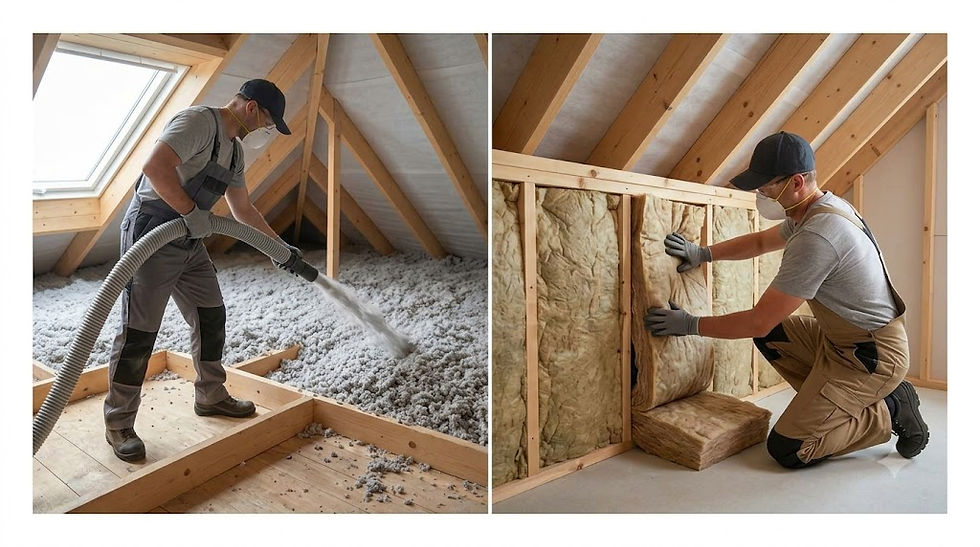
An insulation contractor provides material, labor, and expertise to install insulation—whether in attics, walls, basements, or commercial spaces. In Maryland, these costs are influenced by several factors:
Type of insulation (fiberglass batts, cellulose blow-in, spray foam open-cell or closed-cell, rigid foam board, mineral wool, etc.)
R-value required (depending on climate zone; Maryland often uses R-49 for attics to meet energy efficiency and code requirements)
Size of the area and accessibility (work in attics, crawl spaces, or walls that are easy vs. difficult to reach)
Removal of old insulation or remediation (mold, moisture, pests) or extra tasks like air sealing and ventilation upgrades.
Here are benchmark cost ranges in Maryland, drawn from recent data:
Insulation Type / Area | Typical Cost per Square Foot / Total Maryland-Average Range |
Fiberglass Batt or Roll (attics or walls) | |
Blown-in Cellulose or Loose-Fill | ~$0.60 to $2.30 per sq ft; attic installations generally in range $1,200–$6,000 depending on depth and total sq ft. |
Spray Foam (open-cell / closed-cell) | |
Whole-House Insulation Projects | For significant, whole-home upgrades including attic, walls, basement: $3,000–$10,000+, depending on home size, material, and scope. |
These numbers help homeowners approximate what an insulation company in Maryland might quote when engaging a commercial insulation contractor or a residential one. Many commercial jobs have somewhat different cost structures (higher ceilings, larger walls, special fire or acoustic ratings), so expect premiums in those settings. For a more informed approach, check out 7 Things to Consider When Hiring an Insulation Contractor In Maryland to ensure you select the right professional for your project.
How do residential vs commercial insulation contractor costs compare?
Residential insulation generally involves smaller areas, standard materials, and code-driven R-values. Commercial insulation contractor projects often require specialized insulation for thermal performance, fire safety, sound transmission, and sometimes custom installation on large industrial or commercial roofs or walls. Labor rates in commercial work tend to be higher, and materials may need to meet stricter certifications.
For example, a residential attic retrofit with blown-in cellulose might cost $1,500–$6,000 depending on depth and square footage, while a similar commercial ceiling or roof space could cost significantly more per square foot due to higher overhead, scaffolding, permits, and insulation thickness. Homeyou data in Baltimore shows that average insulation jobs fall between $2,167-$2,412 for a typical residence in that area, but large commercial jobs exceed that.
What is an insulation contractor and why hire one?
An insulation contractor is a professional or company that assesses, recommends, supplies, and installs insulation materials. They are knowledgeable about building codes, material R-values, moisture control, air sealing, and safety. Hiring a trained insulation contractor ensures that insulation is installed properly to avoid gaps, compression of insulating material, moisture issues, or reduced thermal performance.
Maryland’s building code, climate zone, and energy efficiency programs require certain minimum R-value thresholds (for example, attics with R-49, depending on area) and proper ventilation. Contractors also often assist homeowners in navigating rebates and tax credits. For many homeowners, deciding between different insulation types and whether removal of old insulation is necessary are questions best answered by a contractor. Hiring insulation contractor services often results in better long-term energy savings and improved home comfort.
If someone wants to understand more about exactly What does insulation contractor do, that includes inspecting existing insulation, performing energy audits, recommending materials, preparing spaces (dielectrically, sealing, vapor barriers), installing insulation properly, and ensuring the project complies with safety and building codes.
How much does labor add to insulation contractor cost?
Labor is a major component of the final price. In Maryland:
Labor rates for trained installers vary depending on region, type of insulation, and difficulty; jobs in urban or high-cost counties (like Montgomery, Prince George’s, Baltimore) may carry higher labor costs.
Removing old insulation adds labor and waste disposal fees; mold or pest remediation further increase cost.
Air sealing, ventilation, and sometimes adding moisture barriers or vapor barriers are often necessary, adding both labor and materials.
Often clients estimate material cost neglecting labor; a good insulation contractor will offer a detailed quote, breaking out material vs labor vs additional tasks. This transparency helps compare proposals from different insulation company Maryland firms.
What range should a homeowner budget for insulation cost in Maryland?
Taking together material, labor, area of work, and extra tasks, a homeowner in Maryland should expect the following rough budgets by project scale:
Small job (e.g. insulating a small attic hatch, sealing rim joists, adding insulation in a crawl space): $500-$1,500
Medium-scale residential job (attic re-insulation, wall insulation in part of house, basement or crawl space): $2,000-$6,000
Larger residential or mixed residential/commercial properties: $6,000-$12,000+ depending on square footage and complexity
These ranges help set expectations when collecting quotes from an insulation contractor.
What additional costs or hidden factors should be considered?
Even after quotes, there are often other cost contributors:
Permits: Some counties require permits for insulation work, especially commercial properties.
Code upgrades: Older homes may require bringing insulation up to current code (adding more depth, sealing) which can increase cost.
Moisture, mold, pest remediation: If insulation has been compromised.
Energy audit or blower door testing: May be needed to estimate air leaks.
Ventilation and airflow work: Ensuring roofs, soffits, vents are properly functioning.
Access issues: Tight attics, low crawlspaces, or hard-to-reach walls raise labor time.
These factors can often make a quote from an insulation contractor cost significantly higher than just material + straightforward labor.
How to choose the right insulation contractor in Maryland
Selecting the proper contractor is as important as assessing cost. Key criteria:
Licensed and insured – working with reputable contractors protects homeowner.
Experience with both residential insulation and commercial insulation contractor jobs.
Transparent estimates – breaking down materials, labor, additional tasks (air sealing, removal, etc.).
Reviews, references, and local reputation – especially for insulation company Maryland firms.
Knowledge of rebates, tax credits, energy‐efficiency programs – contractors familiar with Maryland programs can help reduce net cost.
A homeowner should ensure the contractor provides clear warranties on work and materials. Exploring benefits of hiring insulation contractor can reveal energy savings, comfort improvement, lower maintenance, and increased property value.
Case study: Cost examples in Baltimore and surrounding regions
In Baltimore, a typical single-family home insulation project (attic or roof sealing, wall insulation as needed) shows average insulation costs between $2,167-$2,412 for “servicing insulation” tasks (not whole-house) based on Homeyou data.
Another example: blown-in attic re-insulation costs in the MD-VA-DC area are often between $1,200-$15,000, depending on size and whether old insulation is removed or only topped off.
These cost examples give realistic anchors for homeowners to compare with quotes from local firms.
Comparative Costs by Insulation Type in Maryland
Material / Type | Estimated Cost per Sq Ft / Board Foot | Common Usage | Notes on Suitability |
Fiberglass Batts / Rolls | $0.30-$1.50 / sq ft | Attics, walls, ceilings | Low cost, moderate R-value; prone to settling or moisture issues if installed poorly. |
Cellulose Loose-Fill / Blow-in | $0.60-$2.30 / sq ft | Attics, wall cavities | Good R-value, eco-friendly; requires blower and clean installation. |
Mineral Wool / Rock Wool | ~$1.40-$4.00 / sq ft | Fire rated areas, soundproofing walls | More expensive; higher thermal mass, flame resistance, better acoustic qualities. |
Open-Cell Spray Foam | ~$1.00-$2.00 per board foot | Sealing gaps, high ceilings, irregular cavities | Lower density; good air sealing; reduced moisture resistance compared to closed-cell. |
Closed-Cell Spray Foam | ~$1.50-$3.00+ per board foot | Exterior walls, roofs, moisture exposed zones | Highest cost; highest R-value per inch; acts as vapor barrier. |
Frequently Asked Questions (FAQs)
1. How does one know when it’s time to call an insulation contractor?
Signs include high energy bills, noticeable drafts or cold spots, ice dams in winter, uneven temperatures between rooms, or insulation that looks discolored or compacted. An insulation contractor can perform an inspection to identify defects.
2. Does insulation contractor cost include removal of old insulation?
Not always. Many quotes assume a clean space. If old insulation is damaged, moldy, or contains pests, removal adds cost. The homeowner should ask contractors to specify removal, disposal, and remediation in the quote.
3. What is the difference between residential insulation and commercial insulation contractor services?
Residential work is often smaller scale, with standard R-value targets and simpler access. Commercial jobs can be larger, involve stricter safety, acoustic or fire ratings, broader materials, more complex installation, and more cost.
4. Can rebates or tax credits reduce insulation contractor cost in Maryland?
Yes. Many utility companies and state programs offer rebates for certain insulation improvements. Federal tax credits may also apply. A contractor familiar with Maryland’s energy-efficiency incentives can help identify and apply them.
5. What are common mistakes to avoid when hiring an insulation contractor?
Mistakes include choosing based solely on lowest cost, ignoring contractor licensing or insurance, not verifying the insulation type or required R-value, overlooking moisture or ventilation issues, and failing to get a detailed, itemized quote.
Conclusion
In Maryland, insulation contractor cost varies substantially based on insulation type, project size, building type (residential vs commercial), labor and material rates, code requirements, and extra tasks such as removal of old insulation, air sealing, or moisture remediation. Typical residential projects fall in the range of $1,000-$6,000, while larger projects or commercial jobs may cost more.
Homeowners are better served by seeking multiple quotes, verifying experience and credentials, and evaluating long-term energy savings when selecting an insulation contractor. For those who value expertise, reliability, and local knowledge, EET Insulation provides professional insulation company Maryland services tailored for both residential insulation and commercial insulation contractor projects, ensuring that expectations align with results.


Comments