Blown-in Insulation vs. Batt Insulation: Pros and Cons

Choosing the right attic insulation is critical for homeowners seeking energy efficiency, comfort, and long-term cost savings. Among the most popular options are blown-in insulation and batt insulation. Understanding the pros and cons of each option allows homeowners to make informed decisions that optimize heating and cooling efficiency while protecting the home’s structure.
Professional evaluation by a certified attic insulation contractor ensures that insulation installation meets recommended R-values and performance standards.
Deciding between blow in insulation and batt fiberglass insulation involves considering factors such as attic layout, existing insulation, climate, and budget. The right choice can lead to significant energy savings and improved indoor comfort.
What is the Difference Between Blown-in and Batt Insulation?
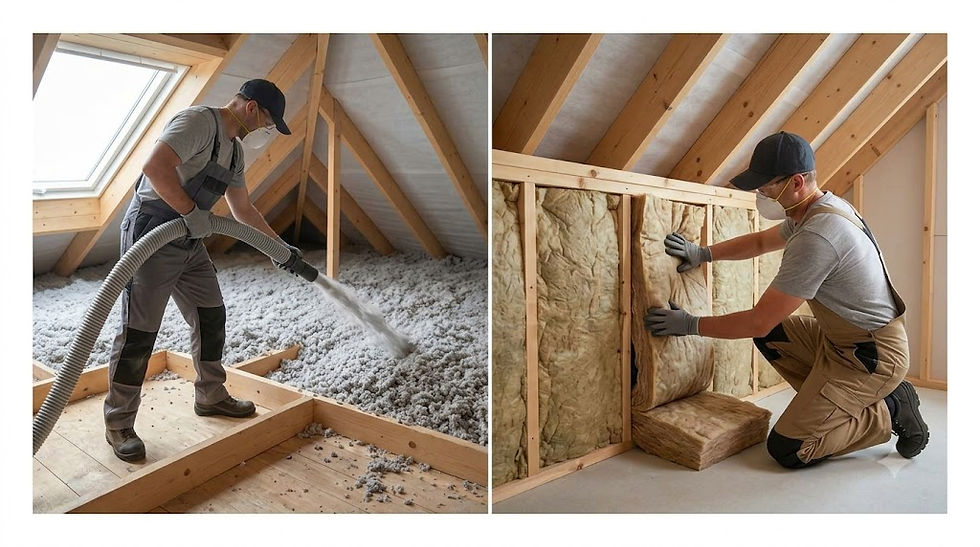
Blown-in insulation and batt insulation differ in material composition, installation methods, and thermal performance. Blown-in insulation, often made from cellulose or fiberglass, is applied using specialized equipment that disperses loose-fill material into attic spaces. This allows it to conform to irregular surfaces and fill gaps that batt insulation might miss.
Batt insulation, typically fiber glass batt insulation, comes in pre-cut panels that fit between joists and rafters. While easier for some DIY projects, batt insulation requires precise installation to avoid gaps and compression that could reduce effectiveness. Homeowners unsure of their current insulation levels can consult Does My Attic Have Enough Insulation? to determine whether an upgrade or replacement is needed before selecting a material.
What Are the Advantages of Blown-in Insulation?
Blown-in insulation offers several advantages that make it a popular choice for many homeowners. Its ability to fill small cavities, voids, and irregular spaces improves thermal performance and prevents air leaks. This insulation type is also ideal for retrofitting older homes or upgrading existing insulation without removing the previous layers.
For homeowners evaluating material options, Types Of Attic Insulation Materials provides guidance on performance characteristics, helping to understand how blown-in insulation compares with batt insulation and other alternatives.
What Are the Advantages of Batt Insulation?
Batt fiberglass insulation is widely used due to its affordability, availability, and ease of installation in standard framing. It provides consistent thermal resistance when installed properly and is suitable for new construction where joist spacing is uniform. Fiber glass batt insulation is also relatively lightweight, making it easier to handle and store.
To understand broader benefits and potential limitations of attic insulation, homeowners may refer to Pros & Cons Of Attic Insulations, which explores energy efficiency, cost-effectiveness, and installation considerations across different insulation types.
Are There Disadvantages to Blown-in Insulation?
While blown-in insulation is effective at filling gaps, it does have potential drawbacks. The installation requires professional equipment and expertise, which can increase labor costs. Settling over time may slightly reduce its effectiveness, particularly if the attic is not properly prepared beforehand. Homeowners should weigh initial investment costs against long-term energy savings when considering blown-in insulation.
Consulting What is the Costs of Attic Insulation in Maryland? helps homeowners evaluate both upfront and long-term financial implications, ensuring they choose a solution that aligns with budget and performance expectations.
Are There Disadvantages to Batt Insulation?
Batt insulation’s effectiveness is highly dependent on proper installation. Improper cutting, compression, or gaps between joists can lead to reduced R-value and increased energy costs. Additionally, batt insulation may not conform well to irregular attic spaces, leaving some areas under-insulated. Homeowners must ensure precise installation and consider professional assistance when installing batt fiberglass insulation.
For guidance on proper insulation quantity and thickness, How Much Attic Insulation Do I Need? provides detailed recommendations based on R-values, attic size, and regional climate requirements.
Feature | Blown-in Insulation | Batt Insulation (Fiberglass) |
Installation | Requires blower equipment | Manual, pre-cut panels |
Ideal For | Irregular or retrofits | New construction, uniform joists |
Air Sealing | Excellent | Moderate |
Initial Cost | Higher | Lower |
Energy Efficiency | High | Moderate to high (if installed correctly) |
DIY Friendly | No | Possible |
How Do Installation Methods Affect Performance?
Installation quality greatly influences insulation performance. Blown-in insulation must be evenly distributed and dense enough to prevent settling. Professional contractors ensure proper coverage and minimize air gaps, optimizing thermal resistance. Batt insulation requires careful measurement, cutting, and placement between joists. Even small errors during installation can reduce overall efficiency.
Homeowners comparing installation approaches can also evaluate Blown-in Insulation vs. Batt Insulation: Pros and Cons to make informed decisions on labor, equipment needs, and expected outcomes.
Cost Considerations
Blow insulation cost depends on material type, attic size, and labor requirements. While blown-in insulation generally has a higher upfront cost due to equipment and expertise, it can offer superior energy savings over time. Batt insulation is more budget-friendly initially but may require careful installation to prevent future energy loss.
Accurate cost planning and evaluation of ROI help homeowners balance budget and performance, ensuring that attic insulation provides long-term benefits without unnecessary overspending.
Long-Term Benefits of Proper Insulation
Proper attic insulation, whether blown-in or batt, improves home comfort, lowers energy bills, and protects structural integrity. Blown-in insulation is particularly effective in filling voids, while batt insulation performs well in uniform spaces with proper installation. Maintaining adequate insulation reduces HVAC strain, minimizes drafts, and enhances indoor air quality. For expert installation and evaluation, homeowners can rely on a trusted insulation contractor in Frederick, MD like EET Insulation.
Homeowners can rely on EET Insulation for expert assessment, installation, and advice on selecting the most suitable insulation type for their attic, ensuring maximum energy efficiency and long-term performance.
FAQs
What is the main difference between blown-in and batt insulation?
Blown-in insulation is loose-fill and fills irregular spaces, while batt insulation comes in pre-cut panels that fit between joists.
Which insulation type provides better energy efficiency?
Blown-in insulation often provides higher energy efficiency in retrofits or irregular spaces, while batt insulation performs well when installed correctly in uniform areas.
Can I install blown-in insulation myself?
DIY installation is possible but not recommended due to specialized equipment and potential coverage issues.
How much does batt fiberglass insulation cost compared to blown-in insulation?
Batt insulation is generally less expensive upfront, while blown-in insulation has higher initial costs but may save more in energy bills over time.
How do I know how much insulation to install?
Consult How Much Attic Insulation Do I Need? for guidance based on R-value recommendations, attic size, and local climate.


Comments