How Much Attic Insulation Do I Need?
- Elyon Bush
- Nov 5, 2025
- 4 min read

Determining the correct amount of attic insulation is essential for homeowners who want to maximize energy efficiency, maintain consistent indoor temperatures, and protect the structural integrity of their homes. Attic insulation plays a pivotal role in reducing heat transfer, minimizing energy costs, and preventing moisture-related issues. Engaging with a professional attic insulation contractor ensures that insulation in attic spaces is installed to meet recommended R-values and industry standards.
The right insulation level varies depending on regional climate, attic size, and the type of material used. Homeowners must understand the differences between insulation types, proper installation methods, and how depth and density affect overall performance to make informed decisions about energy efficiency upgrades.
How Do You Determine the Amount of Attic Insulation Needed?
Calculating how much attic insulation is required involves considering the recommended R-value for your area, the existing insulation, and the type of insulation being used. The R-value measures thermal resistance and determines how well the insulation resists heat flow. In many regions, recommended attic R-values range from R-38 to R-60, depending on local climate conditions.
Homeowners unsure about current insulation levels can consult Does My Attic Have Enough Insulation? to evaluate whether an upgrade is necessary before adding additional layers. This assessment is crucial to prevent over-insulating, which wastes resources, or under-insulating, which limits energy efficiency.
How Do Different Types of Attic Insulation Affect Required Depth?
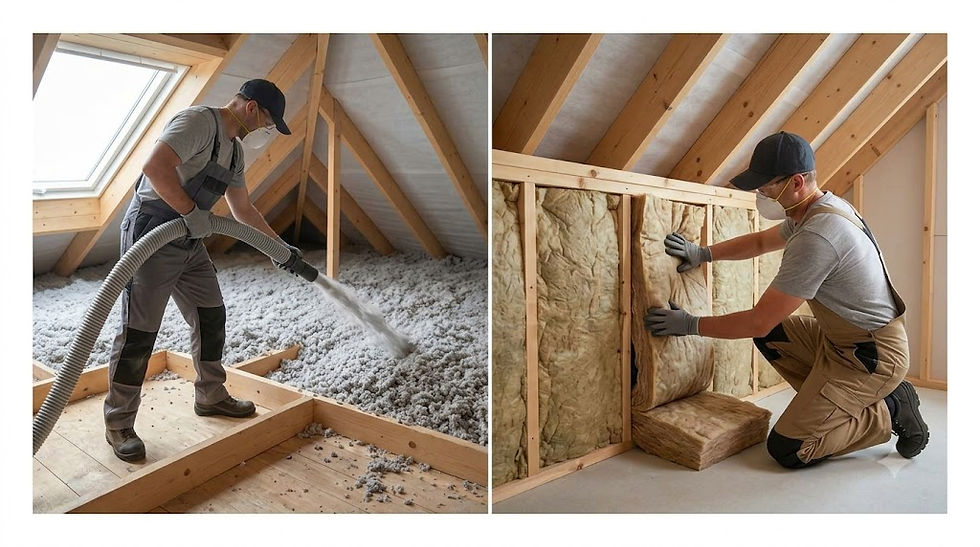
Attic insulation materials vary in density, R-value per inch, and coverage capabilities. Fiberglass batt insulation, for example, has a lower R-value per inch but is straightforward to install in uniform joist spaces. Blown-in insulation, including cellulose and fiberglass, conforms to irregular spaces, allowing for better coverage and air sealing. Spray foam offers higher R-values per inch but comes with higher upfront costs.
For homeowners evaluating material options, Types Of Attic Insulation Materials provides detailed insights into performance characteristics, helping determine how depth and material choice impact the amount of insulation required.
What Are the Pros and Cons of Adding More Insulation?
Increasing attic insulation improves thermal performance, reduces energy consumption, and enhances indoor comfort. However, adding insulation without proper evaluation can be inefficient or even problematic. Over-insulating may compress existing insulation, reducing its effectiveness, while choosing the wrong material could lead to moisture accumulation or air leaks.
Homeowners should review Pros & Cons Of Attic Insulations to understand the benefits and potential drawbacks of various insulation types and installation methods. This ensures optimal performance, longevity, and energy efficiency.
How Does Installation Method Influence Insulation Requirements?
The method of installing attic insulation affects how much material is needed to achieve recommended R-values. Batt insulation requires careful cutting and placement to prevent gaps, while blown-in insulation must be evenly distributed to avoid settling over time. Improper installation can reduce thermal efficiency and increase energy costs.
Comparing installation methods in Blown-in Insulation vs. Batt Insulation: Pros and Cons helps homeowners select the most effective approach for their attic configuration, ensuring energy savings and uniform coverage throughout the space.
What Are the Costs Associated with Adding Attic Insulation?
The cost of adding attic insulation depends on material type, attic size, and installation complexity. Blown-in insulation generally has higher upfront costs due to specialized equipment and professional labor but offers superior performance in irregular spaces. Batt insulation is more affordable initially but requires precision in installation to maintain effectiveness.
For homeowners in Maryland or surrounding areas, What is the Costs of Attic Insulation in Maryland? provides regional pricing, labor considerations, and material cost estimates to plan a budget effectively.
Insulation Material | R-Value per Inch | Recommended Depth | Pros | Cons |
Fiberglass Batt | 2.9–3.8 | 12–16 inches | Affordable, DIY-friendly | Must be installed carefully |
Blown-in Cellulose | 3.2–3.8 | 12–15 inches | Fills gaps, eco-friendly | Settles over time |
Spray Foam | 6.0–7.0 | 6–10 inches | High R-value, air sealing | Expensive, professional installation required |
Mineral Wool | 3.0–3.3 | 10–14 inches | Fire-resistant, soundproof | Higher cost than fiberglass |
Long-Term Benefits of Proper Attic Insulation
Installing the correct amount of attic insulation provides long-term advantages such as consistent indoor temperatures, lower energy bills, improved indoor air quality, and reduced strain on heating and cooling systems. It also contributes to the durability of the home’s structure by preventing moisture-related damage and enhancing overall comfort.
Periodic inspections by a certified attic insulation contractor ensure that insulation continues to perform effectively, maintains recommended R-values, and prevents potential issues from settling, moisture, or pest intrusion.
Conclusion
Determining how much attic insulation is needed is vital for energy efficiency, comfort, and home protection. Accurate calculations, material selection, and professional installation help homeowners maximize thermal performance and long-term cost savings. Homeowners can rely on EET Insulation, a trusted insulation contractor in Frederick, MD, for expert attic insulation evaluation, installation, and guidance on selecting the most suitable materials and depth for their homes.
FAQs
How do I know if I need more attic insulation?
Check the depth of current insulation, look for cold or hot spots, and evaluate energy bills.
What is the recommended R-value for attic insulation?
Most regions recommend R-38 to R-60, depending on climate and local energy codes.
Can I install insulation myself?
Some materials like fiberglass batts can be DIY-installed, but blown-in or spray foam typically requires professional expertise.
How much insulation is needed for a typical 1,000 sq ft attic?
Requirements vary by material; for example, fiberglass batt might need 12–16 inches, while spray foam requires 6–10 inches to achieve similar R-values.
Does adding insulation really save on energy bills?
Yes, properly installed insulation reduces heat transfer, stabilizes indoor temperatures, and lowers HVAC energy consumption.


Comments